 Rio Rancho Stucco Repair
 Stucco Patching in Rio Rancho
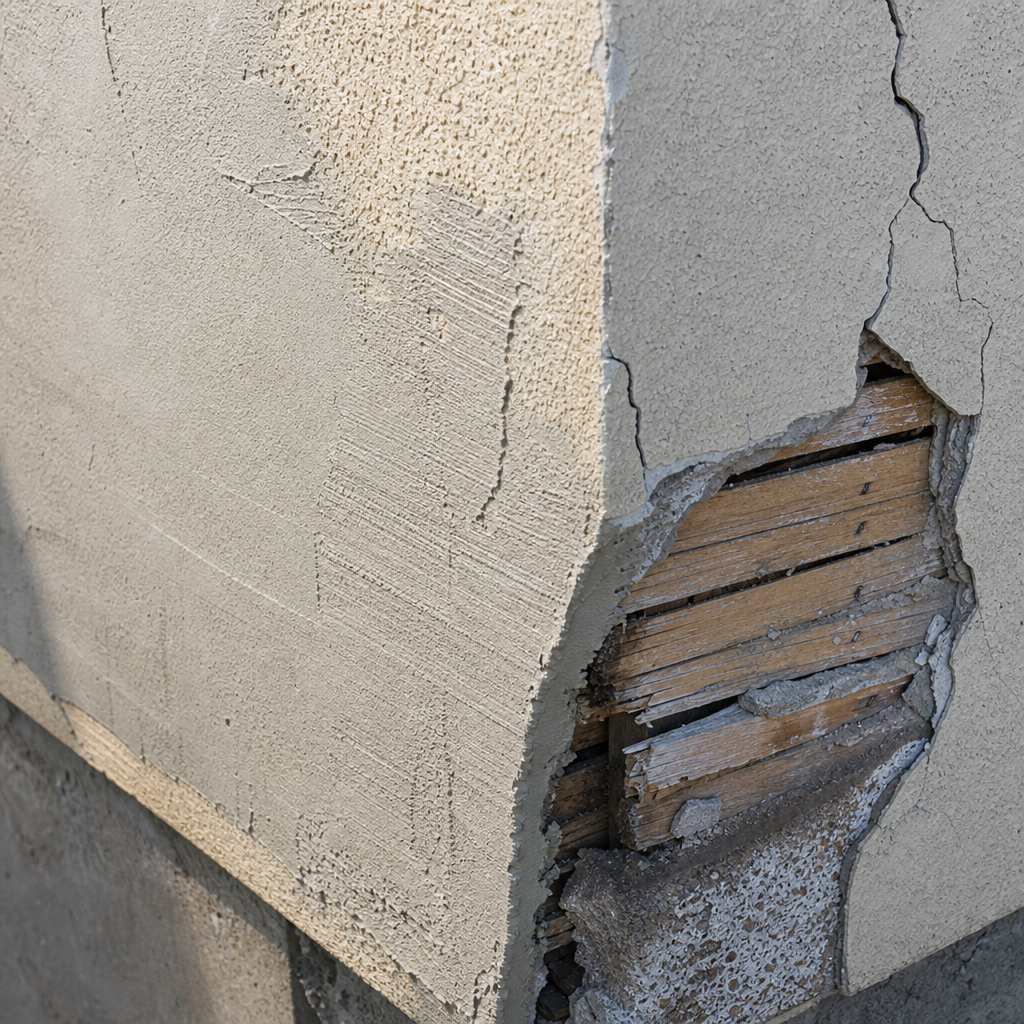
Stucco patching in Rio Rancho typically runs $500–$2,000, or $8–$15 per square foot, and covers the failures crack-filling can’t: blown-out sections with lath showing, hollow delaminated areas, crumbling corners, and soft stucco below a leak. A real patch rebuilds the wall from the weather barrier up (new paper, new lath, scratch and brown coats, matched finish) because the visible hole is never the whole failure. Send photos and get a fast quote.
If crack repair is Rio Rancho’s most common stucco call, patching is the second, and it’s the one where the price gap between doing it right and doing it cheap is widest. Anyone can trowel cement into a hole. Whether that patch survives its second monsoon depends entirely on what happened behind it first.
When a wall needs patching, not crack repair
- Lath or paper visible. A blowout, an impact (hail, a ladder, a backing trailer), or a chunk that finally let go. The wall’s water barrier is open to the weather.
- Hollow sound when tapped. Delamination. The coats have separated from the lath or each other. Tap around the obvious damage; the hollow zone is usually two or three times bigger than the visual one.
- Soft, crumbly, or bulging stucco, typically below a parapet, a canale, a window corner, or wherever a sprinkler has been hitting the wall every morning for a decade.
- Staining plus deterioration. A rust bloom or a fan-shaped water stain with stucco going punky behind it. On flat-roof homes this usually traces up to the parapet or a canale. The patch is step two, fixing the leak is step one.
- Previous bad patches failing. Rio Rancho’s older stock carries decades of handyman patches: mismatched textures, paint smears, cement over EIFS. We tear out and redo these constantly.
What’s behind Rio Rancho stucco (and why it decides your price)
The patch method depends on your wall system, and Rio Rancho has all three:
Three-coat (mostly pre-2000 and custom homes). Paper, wire lath, then ~3/4” of cement in scratch, brown, and finish coats. The original Rio Rancho Estates homes from the AMREP era are largely this. It’s the most forgiving system to patch (thick, well-bonded, plenty to tie into) but at 40–60 years old, the paper behind a leak is often long gone.
One-coat (most 1990s–2000s production homes). A single ~1/2” basecoat over foam sheathing: the standard across Enchanted Hills, Northern Meadows, Cabezon, Loma Colorado, and most boom-era subdivisions. Impact damage punches through more easily, and patches must tie into the foam-and-basecoat assembly correctly, not just get packed with extra cement.
EIFS (synthetic, scattered across newer and custom builds). Foam board, fiberglass mesh in polymer basecoat, acrylic finish. It dents rather than cracks, and it must be repaired with EIFS-compatible materials. A cement patch on EIFS is the worst repair in this trade, it cracks at the joint and funnels water into the foam, where it rots sheathing invisibly for years. If a bid doesn’t mention your system, get another bid.
The patch process, honestly described
- Sound and scope. Tap out the full hollow area and trace the moisture source. If roof water caused it, the canale or parapet gets corrected first, otherwise you’re patching a drain.
- Cut back to sound material. Saw-cut a clean perimeter past the damage and chip out everything loose. Rusted lath and rotten paper come out. Nobody skims over a soft spot. That sentence is most of what separates a real crew from a cheap one.
- Rebuild the weather barrier. New weather-resistive paper lapped shingle-style into the existing so water runs over, never behind. New galvanized lath tied into the old. Flashing corrected at any opening, parapet, or penetration in the patch zone. This layer is invisible on the finished wall and it is the entire job.
- Scratch and brown coats, moist-cured. Cement basecoats built up in stages and given real cure time. The brown coat is floated flush with the surrounding wall and left to cure before finishing, rushing it causes the shrinkage cracks that make patches obvious.
- Finish coat, texture, and color. The existing texture replicated (sand float, skip trowel, smooth) and feathered past the cut line so the patch edge doesn’t print. Color blended to the weathered wall; see color and texture matching for why the original paint chip is the wrong target.
The honest limits
A patch on an old wall is a blend, not a disappearance. Twenty-plus years of high-altitude UV fades a finish coat in a way fresh material won’t perfectly match. Your options, priced up front: accept a close blend, fog-coat the whole elevation, or recoat the wall. On a 1970s Estates-core house with five prior mismatched patches, the recoat is often the better money and we’ll say so.
If a third of the wall is failing, stop patching. Widespread hollow areas, patch-on-patch history, or a finish coat that’s chalking off, at some point per-square-foot patching costs more than a proper recoat or restucco at $6–$9/sq ft. We quote both when it’s close and let you decide with the pricing page numbers in hand.
Water damage is the price variable. A fresh blowout from a hailstone is a small clean job. The same size hole that’s been drinking monsoon rain for two summers may hide rusted lath and wet sheathing across triple the area. That’s the difference between $500 and $2,000, and the argument for sending photos this week, not after the next storm.
Timing and next step
Patching season in Rio Rancho runs spring through fall: cement work needs above-freezing cures, and at 5,300 feet the winter nights don’t cooperate. The priority queue is simple: open lath before the July–September monsoon beats everything else, because every driving rain multiplies the rebuild behind the hole. The quote is the fast part, usually same-day from photos, and the earlier the hole gets photographed, the more affordable the wall behind it stays.
Send three photos (damage close-up, full wall, and the roofline or parapet above) plus your cross streets and the home’s rough age. You’ll get a flat range, the likely cause, and the honest call between patch and recoat. We patch walls across Rio Rancho, Corrales, Bernalillo, Placitas, and Albuquerque.
Frequently Asked Questions
How much does stucco patching cost in Rio Rancho?
Typical patch jobs run $500–$2,000, or $8–$15 per square foot depending on the stucco system and access. The spread mostly reflects what the water did behind the stucco, rusted lath and rotten paper add teardown and rebuild. Photos get you a fast range.
What does it mean when stucco sounds hollow?
Hollow means the cement coats have delaminated, separated from the lath or the coat behind them, usually because water got in and worked the bond apart, often helped by freeze-thaw. Hollow stucco hasn't fallen off yet, but it will, and skimming new material over it just adds weight to a failed bond.
Can you just fill the hole without tearing more out?
Not honestly. The visible hole is the middle of the failure, not its edge. A proper patch cuts back to sound, well-bonded stucco past the damage, replaces the paper and lath behind it, and rebuilds the coats. Filling only the hole leaves failed material and a compromised water barrier around the repair, it's the patch that fails by next monsoon.
Will the patch match the rest of the wall?
Texture, yes, matched and feathered into the surrounding wall. Color is blended to the weathered wall and judged dry in daylight; on an older sun-faded elevation we'll tell you up front whether an accepted blend or a fog coat of the whole wall is the right call.
How long does a stucco patch take?
Usually two or three short visits over several days to a week: demo and weather-barrier rebuild plus scratch/brown coats first, then the finish coat after the base cures. Cement needs cure time between coats, rushing it is what causes shrinkage cracking.